
10 Nights · Northeast Italy · 6 Guests
Live Real
Chapter Two
From the vineyards of the Collio to the forests of the Dolomites and the hills of Valpolicella. Wine, mountains and lakes, at an unhurried pace.
What's Included
Venice Marco Polo Airport
properties, 1 near the airport
personally chosen by Andrea
and excursions
within Italy
and a day at the spa
International flights are not included. Guests arrive at Venice on Day 1 and fly home on the morning of Day 11.
Day
Welcome to Italy
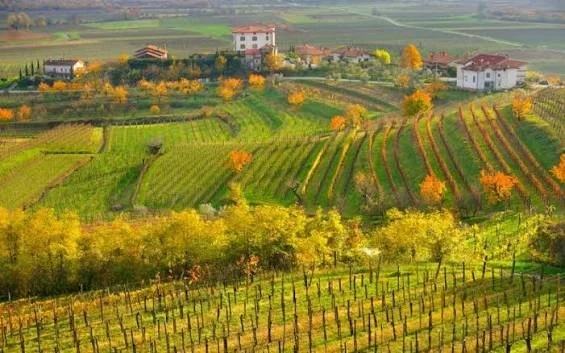
From the moment you land, we take care of everything. We pick you up at Venice airport, and an hour and a half later you leave the highway behind and find yourself among the vineyards. Your home for the next three nights is Agriturismo Zegla, a family farm on the hills just outside Cormòns, in the heart of the Collio.
This is a corner of Italy few travellers know, and one Andrea knows well. For years Andrea imported wines from these very hills to the United States, and still believes the Collio makes some of the finest white wines in Italy. Slovenia is a few kilometres away, and for centuries the border moved back and forth across these slopes, so the food, the names and the wine carry a little of Italy, Austria and the Slavic world all at once. Quiet villages, rows of vines running over every hill, and hardly a tour bus in sight.
A relaxing afternoon among the vines, then the welcome dinner at a restaurant Andrea has chosen for you.
Day
A Day with the Keber Family
In 1900, when these hills still belonged to the Austrian Empire, Franc Keber walked over from the nearby village of Vipulzano and settled on the hill of Zegla. His family grew fruit, grapes and hay for the Austrian army, and sent their wine, mostly Ribolla, to the Habsburg court in Vienna. Four generations later, his great-grandson Renato makes wine on the same hill, a short walk from where you are staying.
Renato walks you through fifteen hectares of terraced vineyards, where the vines grow in ponca, layers of marl and sandstone that were once the floor of the sea. Every grape is picked by hand. Then it's down into the cantina, where Renato explains why he waits for his wines. His Ribolla Gialla "Extreme" macerates for a month in open cement tanks with only its own wild yeasts, then rests in large casks for two and a half years before it is released. The tasting follows, from Friulano made from the oldest vines on the hill to the whites that only show who they are after years in the bottle.
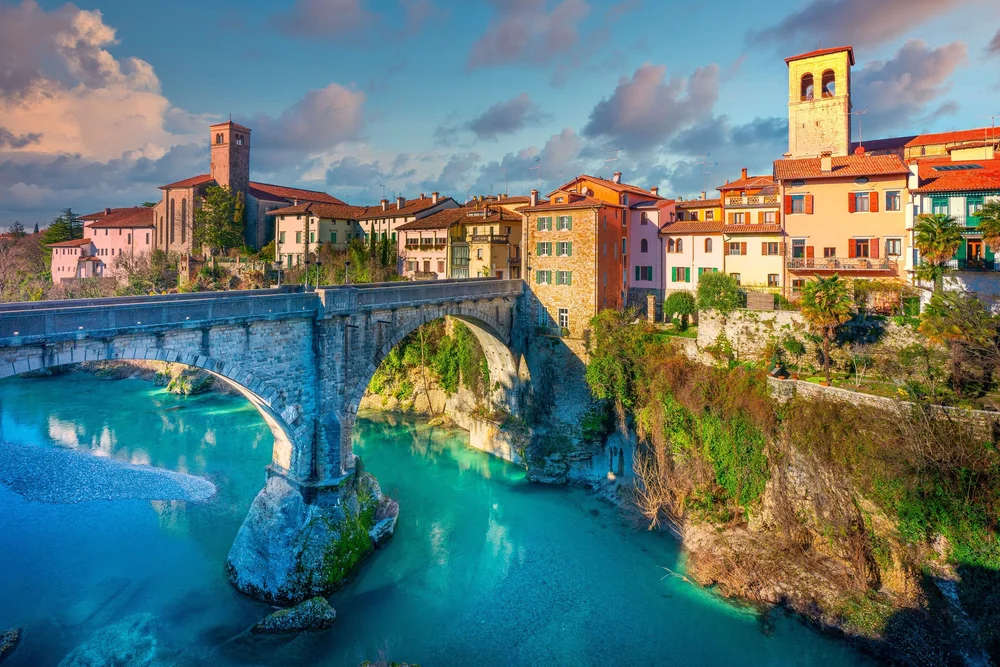
In the afternoon, a short drive brings you to Cividale del Friuli, a small town perched above the emerald waters of the Natisone river. Julius Caesar founded it as Forum Iulii, the name that would one day become Friuli, and in the 6th century the Lombards made it the capital of their first duchy in Italy. Today it is a UNESCO World Heritage Site.
You step inside the Tempietto Longobardo, a tiny 8th-century chapel where six stucco saints have watched over the river for more than 1,200 years. Then you walk out onto the Devil's Bridge. Legend says the townspeople could not build it alone, so they made a deal with the Devil, promising him the first soul to cross. When it was finished, they sent a cat over first. Before heading back to the Collio for dinner, there's time for a slice of gubana, the spiral cake of nuts, raisins and grappa that every family in town claims to make best.
Day
The Emerald Lakes
Today you head north, into the mountains where Italy, Austria and Slovenia meet. In about an hour and a half the vineyards give way to forest, and the forest to limestone peaks.
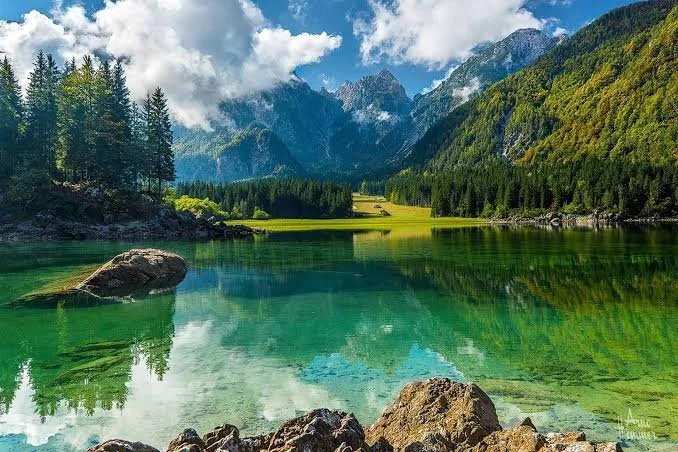
Hidden in a basin at the foot of the Mangart, the Laghi di Fusine are two glacial lakes whose water shifts from emerald to turquoise to deep blue depending on the light. Spruce and larch forest runs right down to the shore, and the reflection of the peaks on still mornings is something you will remember for a long time.
With your local guide, you walk an easy trail around the lakes and through the forest, with time to stop, look and simply breathe. Lunch is at a mountain hut by the water.
On the way back, you stop in San Daniele del Friuli, a small hill town where the cold air from the Alps meets the warm breeze from the Adriatic. That meeting of winds is the whole secret of its famous prosciutto. Nothing is added but sea salt, and the hams are left to cure slowly for more than a year in the mountain air. At a family prosciuttificio you walk among the rows of hanging hams, then taste the prosciutto sliced paper-thin, with a glass of Friulano. Then it's back to the Collio for your last evening among the vines.
Day
Into the Dolomites
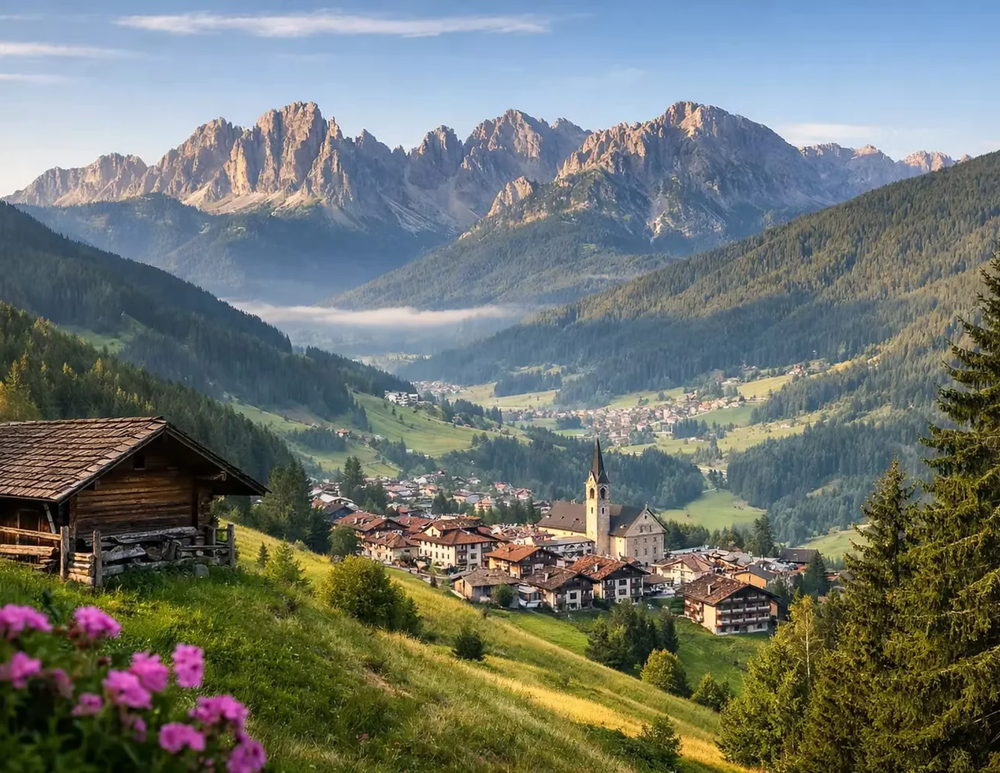
After breakfast you say goodbye to Friuli and drive west into Trentino, arriving in the early afternoon in Cavalese, your home for the next three nights, surrounded by the forests and peaks of the Val di Fiemme.
For more than 900 years this valley has governed itself. The Magnifica Comunità di Fiemme, an assembly of local families, still owns and cares for the forests today, and their seat is the Palazzo della Magnifica Comunità, in the centre of Cavalese, its façade covered in frescoes. The afternoon is for a slow walk through the old town, past the palazzi with their painted walls, and then along the paths of the Parco della Pieve, a quiet wood of ancient larches and stone benches where the community once gathered to hold court.
Day
Val Venegia
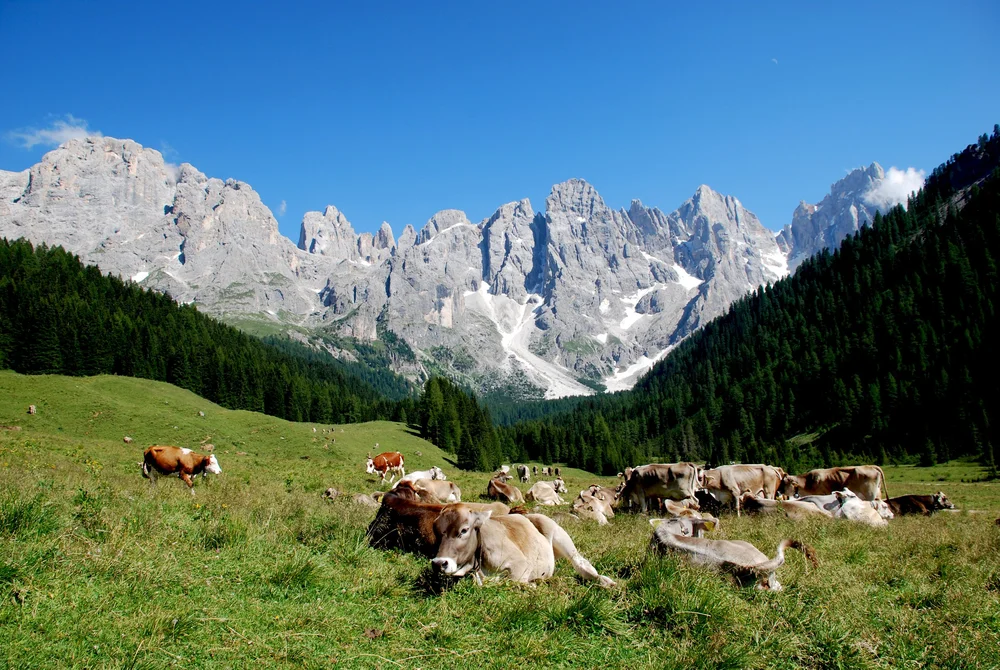
Today belongs to the mountains. A short drive past the ancient spruce forest of Paneveggio, where the wood for Stradivari's violins was once chosen, brings you to Val Venegia, a high valley that many here call the most beautiful in the Dolomites.
With your local mountain guide, you follow an easy track along a clear mountain stream, through larch woods and open pastures, with the pale walls of the Pale di San Martino and the sharp peak of the Cimon della Pala rising straight ahead. The pace is set by the group, never by the clock. About two to two and a half hours of walking, 6 to 8 kilometres in all, on wide, well-kept paths.
Lunch is at a mountain hut in the valley, with the simple food the mountains have always offered: polenta, local cheeses, cured meats and the dishes of the valley. If the light is right on the way back, you may see the enrosadira, the moment the Dolomites turn pink and red as the sun goes down.
Day
A Day to Slow Down
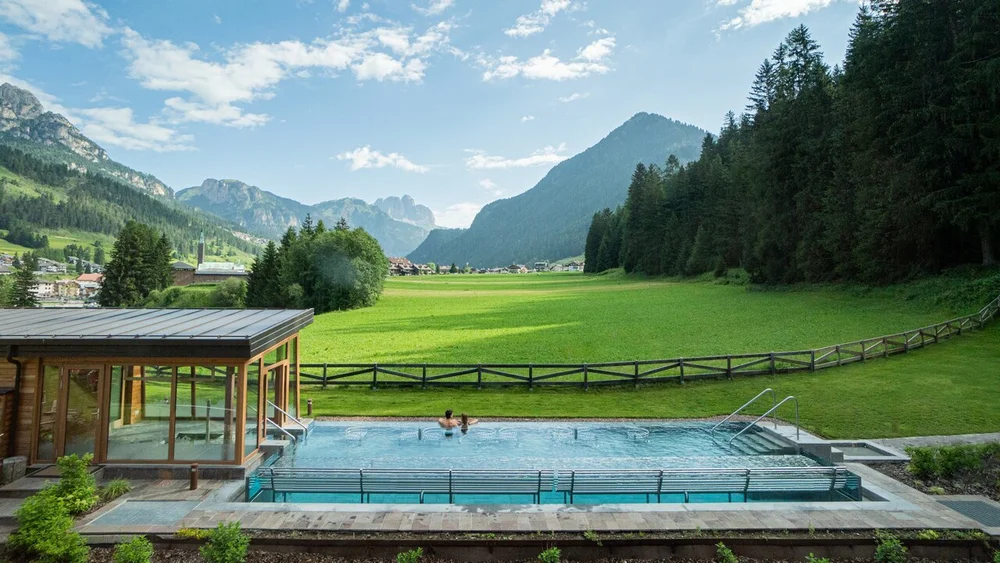
Today is all about rest. A slow breakfast, a morning with nowhere to be, and then the warm water.
A short drive over the hills brings you to QC Terme Dolomiti, in the neighbouring Val di Fassa. Fed by a natural sulphur spring, the spa spreads over three floors of pools, saunas and steam rooms, with warm outdoor pools facing the Rosengarten, the range the Ladin legends say turns red at sunset because of a dwarf king's lost garden of roses. You float, you rest, you do nothing at all, and as the light drops the peaks begin to glow.
In the evening, a last dinner in the valley, with the forest going dark outside the windows.
Day
San Giorgio di Valpolicella
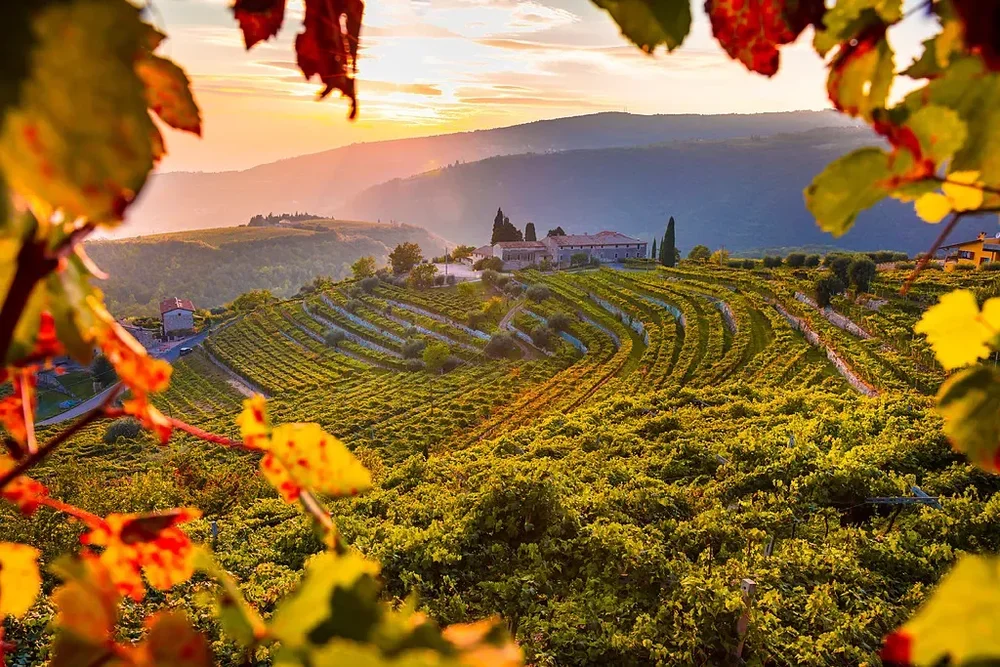
You leave the mountains behind and follow the Adige valley south, where the forests turn to orchards, then to vineyards and olive groves. By lunchtime you reach Valpolicella, your home for the last three nights.
The afternoon is spent in San Giorgio, a tiny village of pale stone perched on a hill above the vineyards, and one of the most beautiful villages in Italy. At its heart is the Pieve di San Giorgio, a Romanesque church more than a thousand years old, with a quiet cloister and, inside, a carved stone altar canopy from the time of the Lombard kings. Step out onto the terrace and the view runs from the vines below all the way to Lake Garda shining in the distance.
Day
A Day at Corte Bravi
Brothers Andrea and Ivano Brunelli make wine in the small valley of Gargagnago the way their land asks them to. Organic farming, grapes picked by hand, and as little intervention in the cellar as possible. Their father bought the land in 1990, and in 2011 the brothers began making their own wine.
Today you spend the day with them, in the vineyard and in the cantina, learning how natural wine is made. Mustard and elderflower grow between the rows to keep the soil alive, nettle is brewed to strengthen the vines, and the skins left after pressing go back to the earth they came from. You'll see how the grapes for Amarone are laid out to dry for months before they are pressed, the old tradition that makes this valley famous.
Then it's time to taste their wines.
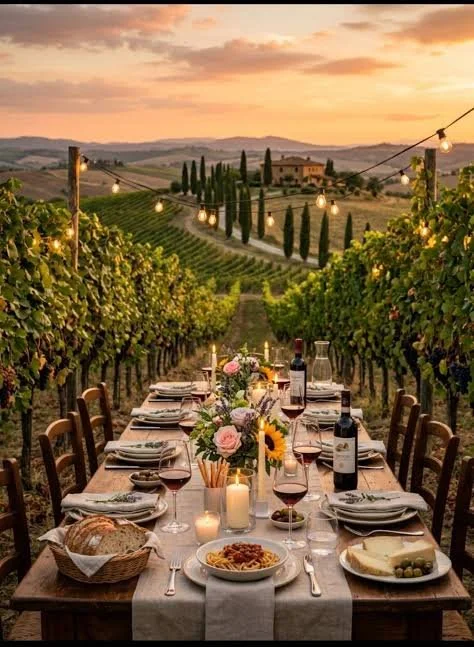
In the afternoon, the kitchen is yours. With the Brunelli family, you learn to cook the dishes of the Veronese hills by hand, the recipes that have always been made to go with these wines. Then, as the sun goes down, a long table is set out among the vines. You sit down to eat what you've made under the open sky, with Corte Bravi's wine poured alongside and the hills of Valpolicella turning gold around you.
Day
Lake Garda
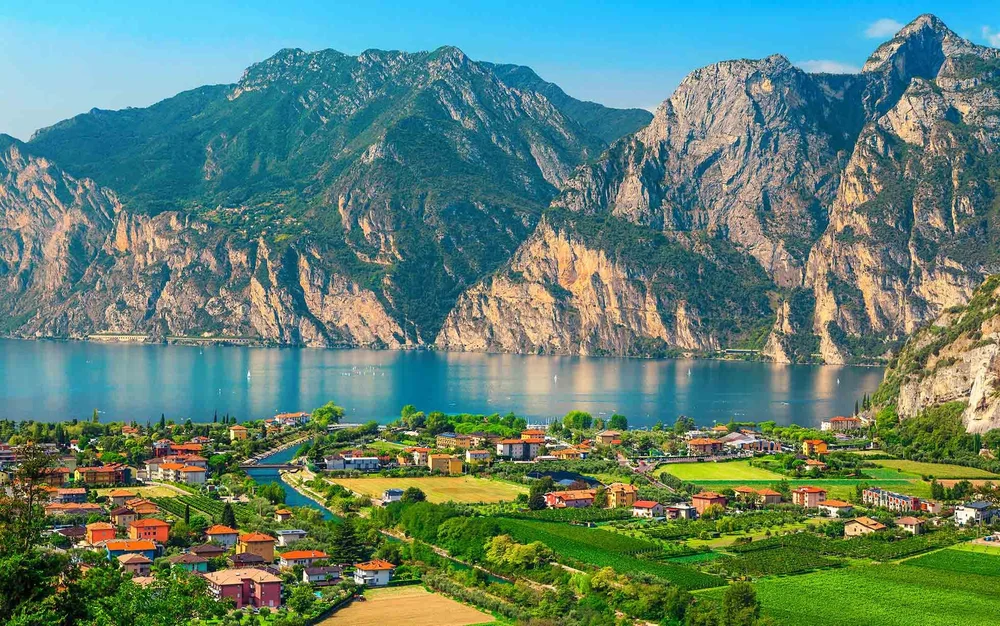
Lake Garda is only half an hour away, and today you spend it on and around the water.
The morning begins in Lazise, a walled medieval town on the eastern shore, where the old harbour is lined with fishing boats and cafés. From here a private boat carries you south across the lake to Sirmione, the slender peninsula that reaches out into the water. You arrive the way visitors have for centuries, gliding past the walls of the Rocca Scaligera, the 13th-century castle that rises straight out of the lake. You walk the lanes up to the ruins of a vast Roman villa at the tip of the peninsula, with water on three sides, then sit down for a long lunch by the lake.
On the way back, a stop at an olive grove near Bardolino, where the gentle climate lets olive trees grow further north than almost anywhere in Europe, for a tasting of the oil pressed there.
Day
Until next time
A last breakfast among the vineyards, then a transfer east to your hotel near Venice airport, ready for your flight home the next morning. The trip is over. The memories are yours.